Skip to content
If you have been searching for backyard deck ideas for small yards, you are not alone. Homeowners across the Meridian, ID area love spending time outdoors, but a compact backyard can make it hard to know where to start. The good news? A smaller yard does not mean you have to give up on comfortable outdoor living.
With the right layout, materials, and features, even a modest backyard can become a space you actually enjoy using. The Meridian Deck Builders team has spent years helping local homeowners turn tight outdoor areas into functional decks built for dining, relaxing, and entertaining — all without overwhelming the yard.
Whether you live in Meridian, Boise, Eagle, or anywhere else across the Treasure Valley, the key is making every square foot count. That means picking a layout that fits your property, choosing materials that hold up to Idaho’s hot summers and cold winters, and adding features that work hard without adding bulk. That is exactly what our team of local deck-building experts can help you figure out.
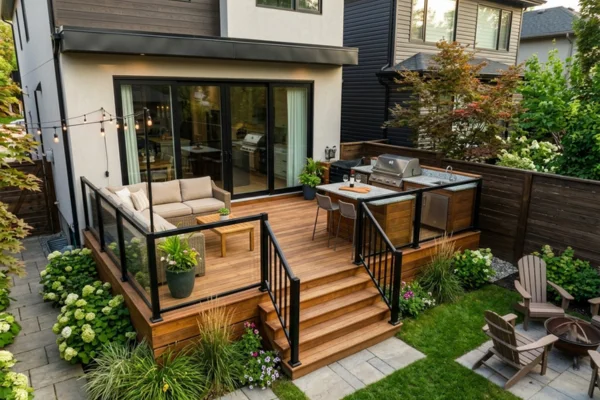
Quick Answer: What Is the Best Deck Design for a Small Backyard?
The best small backyard deck is one designed around how you actually plan to use the space. Simple rectangular, L-shaped, and multi-level decks can all work well depending on your yard and home layout.
For most compact yards, prioritize:
• A layout that preserves open yard space
• Built-in seating or storage
• Durable, low-maintenance materials
• Vertical features such as pergolas or lighting
• Proper structural design and local code compliance
A well-designed deck does not need to be large to add meaningful outdoor living space. The best backyard deck ideas for small yards put practical use first — and that starts with understanding your property before you pick a single board.
1. Start With the Space You Actually Have
The biggest mistake homeowners make with a small backyard deck is jumping into design before fully understanding the available space. Sketching a dream deck without measuring real constraints often leads to a disappointing — and expensive — result.
Before choosing a shape or material, our team of decking professionals encourages all local homeowners to consider the following:
• The usable dimensions of your backyard
• Property setbacks and local building requirements
• Existing irrigation, utilities, or HVAC equipment
• Changes in grade or slope
• Access points from the home
• How much open yard space you want to keep
• How your family currently uses the space
• Drainage, trees, and other site factors
In many Treasure Valley neighborhoods, the backyard has limited depth after accounting for the home’s footprint and required setbacks. That does not mean a deck is out of reach. It simply means the design needs to be intentional.
A professional deck builder can identify structural and site issues before construction begins. That upfront evaluation prevents costly changes once the project is underway.

2. Choose a Deck Shape That Makes the Yard Feel Larger
The shape of your deck has a big effect on how open the backyard feels. Among the most common backyard deck ideas for small yards, three shapes stand out:
Rectangular decks are often the most cost-effective. They work well when you need a simple space for a table, seating, or grill.
L-shaped decks create separate dining and lounging areas without a large footprint. They are a smart choice for narrow or awkwardly shaped yards where a single rectangle would eat up all the open space.
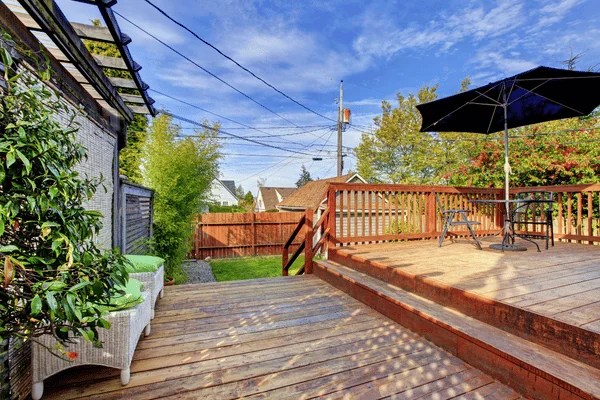
Multi-level decks add visual depth and create distinct outdoor zones — especially on sloped properties. Instead of expanding outward, the design uses elevation to create more usable space. These small deck designs are particularly popular across Treasure Valley neighborhoods built on hillsides.
For some homes, an angled or wraparound layout can also draw the eye outward, making a compact yard feel less confined. The right option depends on your property’s layout, grade, and how you plan to use the deck.
3. Choose Deck Materials That Can Handle Idaho’s Climate
Material choice is one of the most practical backyard deck ideas for small yards — the right boards handle Idaho weather and keep maintenance low. Intense summer sun, dry air, wide temperature swings, and winter snow can all shorten a deck’s life if the materials are not up to the job.
For most homeowners, the choice comes down to composite or natural wood.
| Material | Best For | Maintenance | Main Consideration |
| Composite decking | Long-term durability, low upkeep | Low | Higher upfront cost |
| Cedar | Natural appearance | Moderate to high | Needs regular sealing |
| Pressure-treated wood | Lower initial cost | High | More prone to checking and weathering |
Composite Decking
Composite decking is a popular choice for Treasure Valley homeowners who want a durable, low-maintenance outdoor space.
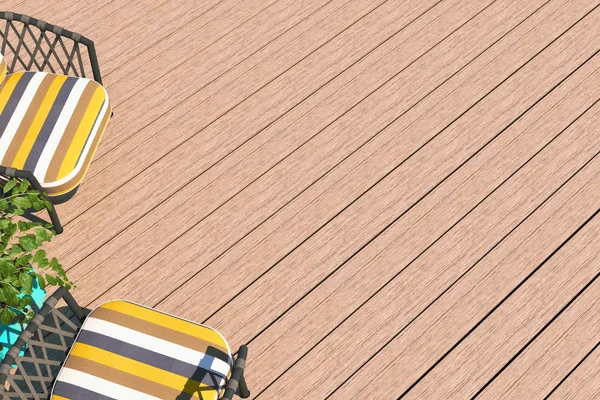
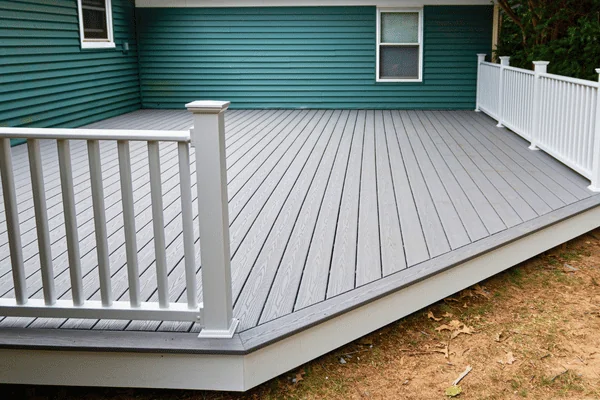
Capped composite boards resist fading, stains, and moisture — and you won’t need to sand or stain them. For a small deck, this matters even more because the entire surface stays visible and easy to care for.
Professionally installed composite decks cost more upfront, but many homeowners find the tradeoff worthwhile. Our composite decking cost guide breaks down what to expect in this market. Composite boards also tend to last 25 to 50 years with minimal upkeep.
Small Backyard Wood Deck Ideas
Natural wood is still a solid option for homeowners who prefer its look or need to manage upfront costs.
Cedar offers natural resistance to decay and insects. However, Idaho’s dry climate and strong UV exposure mean it should be cleaned and resealed regularly to prevent cracking.
Pressure-treated lumber is the most budget-friendly option. It is commonly used for framing and can also serve as the deck surface, though it needs more ongoing care than composite. For homeowners exploring small backyard wood deck ideas on a tighter budget, a pressure-treated frame with a composite top layer can split the difference on cost and durability.

4. Make a Small Deck More Functional Without Making It Feel Crowded
The best small deck design ideas focus less on square footage and more on making the space work harder.
Built-In Seating and Storage
Built-in benches cut the need for bulky outdoor furniture and keep the center of the deck open. When you are working with under 200 square feet, every freestanding chair or table affects how easily people move around.
Storage benches also double as a place for:
• Outdoor cushions
• Gardening supplies
• Children’s toys
• Small outdoor accessories
Add Shade With a Vertical Feature
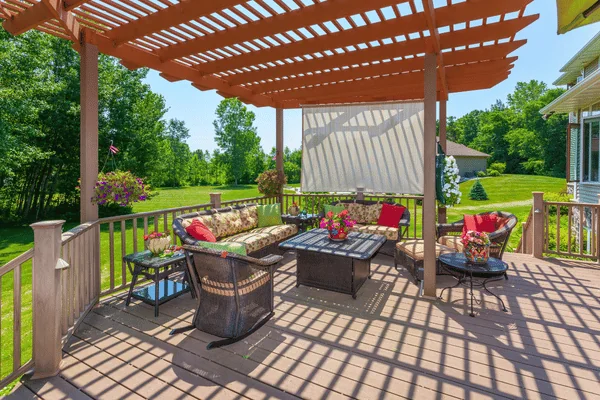
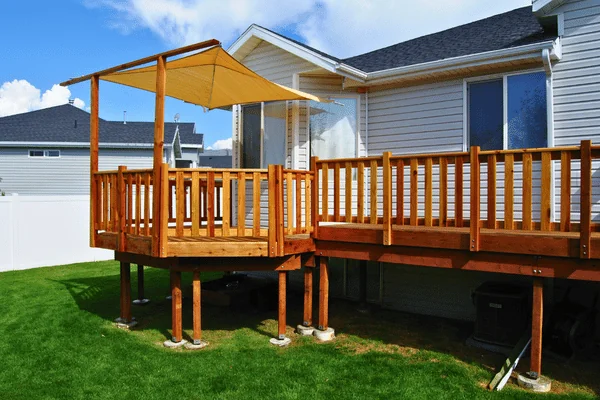
A pergola or shade structure can make a small deck feel more like an outdoor room without increasing its footprint. This is especially valuable during Treasure Valley summers, when afternoon temperatures regularly top 90°F and an uncovered deck becomes uncomfortable.
Depending on the design, homeowners may add:
• A traditional wood pergola
• A metal shade structure
• A retractable canopy
• Adjustable louvers
• Climbing plants or shade fabric
Use Lighting to Extend the Space Into the Evening
Low-voltage deck lighting adds function without taking up physical space. Good locations include:
• Under built-in benches
• Railing posts
• Walkways
• Recessed deck boards
The right lighting setup improves safety on stairs and edges while making the deck usable well past sunset.
5. Do Not Overlook Structural Requirements
A small deck still needs to be built for the conditions it will face. In Idaho, factors like frost depth (36 inches in Ada County per the Idaho Division of Building Safety), soil conditions, snow loads, and the deck’s height all affect what the structure requires.
An elevated or attached deck may need properly designed footings, code-compliant railings and framing sized for the expected loads.
This is where cutting corners creates real problems. Do not assume that a small deck can automatically use:
• Surface-mounted footings
• Precast blocks
• Undersized framing
• Improvised connections
Requirements vary by property and deck design. A qualified local builder can evaluate the site and design the substructure to meet IRC residential deck standards from the outset.

6. How Much Does a Small Deck Cost in the Treasure Valley?
The cost of a deck depends on size, materials, site conditions, railing type, elevation, and structural complexity.
As a general guide, here are typical installed price ranges for this market:
| Project | Estimated Installed Cost |
| 12×16 pressure-treated deck | $7,000–$11,000 |
| 12×16 composite deck | $12,000–$18,000 |
| 20×20 pressure-treated floating deck | $10,000–$16,000 |
| 20×20 composite floating deck | $18,000–$28,000 |
These ranges can shift based on material selection, permitting, site access, stairs, railings, and other project details. Our full deck cost guide covers additional factors that affect your final number.
The best way to set a realistic budget is to start with a design and site evaluation rather than relying on a per-square-foot estimate alone. Many of the most effective backyard deck ideas for small yards are also the most affordable — simple shapes, smart built-ins, and the right material for your climate.
Ways to Control Your Deck Budget
A small deck does not need every premium feature to look great. To manage costs:
• Keep the overall shape simple
• Minimize unnecessary angles and elevation changes
• Choose a mid-range composite rather than a top-tier product
• Limit complicated railing systems
• Use built-in features strategically
• Invest in proper structural work before cosmetic upgrades
The foundation, framing, and connections are the areas where you should never cut back. Those components affect safety and long-term performance.
7. Is a Deck or Concrete Patio Better for a Small Backyard?
For a flat, at-grade yard, a concrete patio is often the less expensive option.
However, a deck may be the better choice when:
• The yard has a noticeable slope
• You need an elevated outdoor space
• You want direct step-out access from the home
• You prefer the look of wood or composite
• You need more design flexibility
A concrete patio works well for homeowners focused on cost and a simple ground-level area. But when elevation, drainage, or grade changes are part of the picture, a deck is usually the more flexible solution — and the backyard deck ideas for small yards in this guide apply regardless of which direction you choose. We also offer patio and hardscape services if that turns out to be the better fit for your property.
In some cases, pairing a concrete patio with a pergola or shade structure gives homeowners a functional outdoor space at a lower price point.

8. Small Backyard Deck Ideas That Deliver the Most Value
If you are planning a backyard small deck, focus on features that improve usability instead of simply making the structure larger. Here are some of the small backyard deck ideas our team recommends most often:
A Compact Dining Deck

A simple deck large enough for a small table and four chairs creates a dedicated outdoor dining space without taking over the yard.
A Built-In Lounge Area

Perimeter seating creates a comfortable gathering spot while keeping the center of the deck open for foot traffic.
A Small Deck With a Pergola
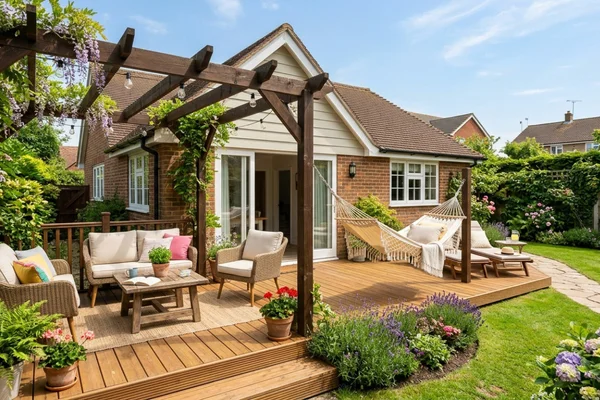
Adding a vertical structure defines the outdoor space, provides shade, and makes a compact deck feel more like a finished room. Pergolas are one of the most popular add-ons we install for this reason.
A Multi-Level Deck for a Sloped Yard
Using elevation solves grading challenges while creating separate zones for dining, grilling, or relaxing. These small deck designs also make the overall yard feel larger by breaking up sight lines.
A Low-Maintenance Composite Deck

For homeowners who want to spend more time enjoying the backyard and less time maintaining it, composite is a worthwhile long-term investment.
Get More From Your Small Backyard With Meridian Deck Builders
A limited backyard does not mean you have to settle for limited outdoor living space.
At Meridian Deck Builders, we help homeowners throughout Meridian, Boise, Eagle, Nampa, and the Treasure Valley design and install decks around their property, lifestyle, and budget. Whether you need a compact entertaining area, a multi-level design for a sloped yard, or a durable composite deck, our team can help you explore the right options.
Whether you are considering small backyard wood deck ideas or a modern composite build, the right design can turn a tight space into one of your favorite spots at home.
Ready to make better use of your backyard? Contact Meridian Deck Builders to schedule a free design consultation and estimate for your project.
Frequently Asked Questions
What is the best deck shape for a small backyard?
It depends on the layout of your home and yard. Simple rectangular decks are often the most affordable. L-shaped or multi-level small deck design ideas create separate functional areas without needing a much larger footprint.
How much does a 20×20 floating deck cost in Idaho?
In the Treasure Valley, a professionally installed 20×20 floating deck runs roughly $10,000 to $16,000 with pressure-treated wood or $18,000 to $28,000 with composite materials. Final pricing depends on materials, site conditions, and project complexity.
What are some low-budget small backyard deck ideas?
A simple rectangular pressure-treated deck is usually the most affordable approach. You can also keep costs down by minimizing stairs, choosing mid-range materials, and prioritizing proper framing over cosmetic upgrades.
Is composite decking worth it for a small backyard?
For many homeowners, yes. The higher upfront cost pays off in lower maintenance and longer life. That tradeoff is especially clear in Idaho, where sun and dry conditions speed up wear on natural wood.
How do I make a small deck feel bigger?
Keep the layout open, skip bulky furniture, use built-in seating, and add vertical elements like a pergola or lighting. Choosing the right deck shape and preserving open yard space also helps the entire backyard feel larger.
What is the best deck size for a small backyard?
A deck between 100 and 200 square feet typically provides space for dining or relaxing while preserving enough open yard for landscaping and everyday use.
How do you design a deck for a small backyard?
Start with how you plan to use the space. Pick a simple layout, keep walking paths clear, and add built-in seating or storage to boost function without crowding the deck.
What is the best deck layout for a narrow backyard?
Rectangular and L-shaped layouts tend to work best. They can follow the home’s footprint, preserve open space, and carve out areas for dining, relaxing, or grilling.
How do you arrange furniture on a small deck?
Keep pieces compact and position them around the perimeter. Built-in benches, small tables, and multi-purpose furniture help preserve open floor space and keep walking paths clear.
Can you build a deck in a very small backyard?
Yes. Even a compact backyard can fit a functional deck. The key is to scale the design to the space and focus on features that match how you actually use the area.
Does a small deck add value to a home?
A well-built deck can add value by creating usable outdoor living space and improving curb appeal. The return depends on materials, build quality, the local market, and how well the deck fits the property.
What features should I include on a small deck?
Consider built-in seating, storage, lighting, shade, or a compact grilling area. Multi-purpose features add comfort and function without eating up valuable square footage.